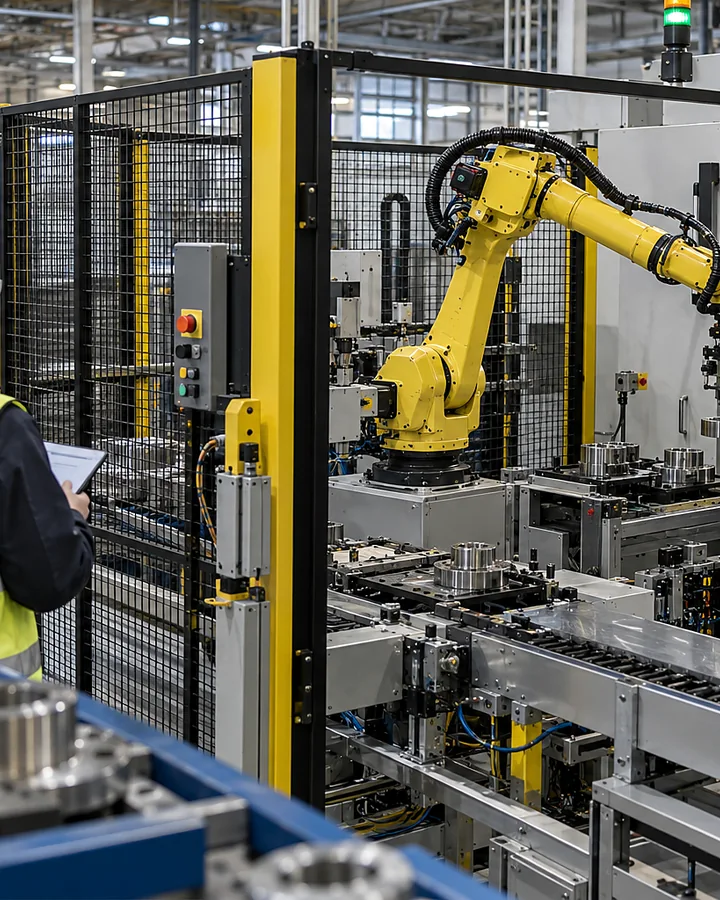
Yellow robot arm beside metal components and an open machine enclosure.
Industrial automation and robotics

Robotic Leak Testing

Plan robotic leak testing around your parts, process, cycle time, tooling, recovery and acceptance criteria. Discuss the highest-risk feasibility questions with Oxford Industrial Automation.

Speak directly with Oxford Industrial Automation about robot-loaded leak-test stations.

Quick answer

How can robotic loading be integrated with a leak-test station?

Start with the approved leak-test method, component fixtures and acceptance limits. Define how the robot loads, connects and unloads the part without changing the test conditions. Trial good, failed and interrupted tests, ensuring that the result remains associated with the correct component and its release or reject route.

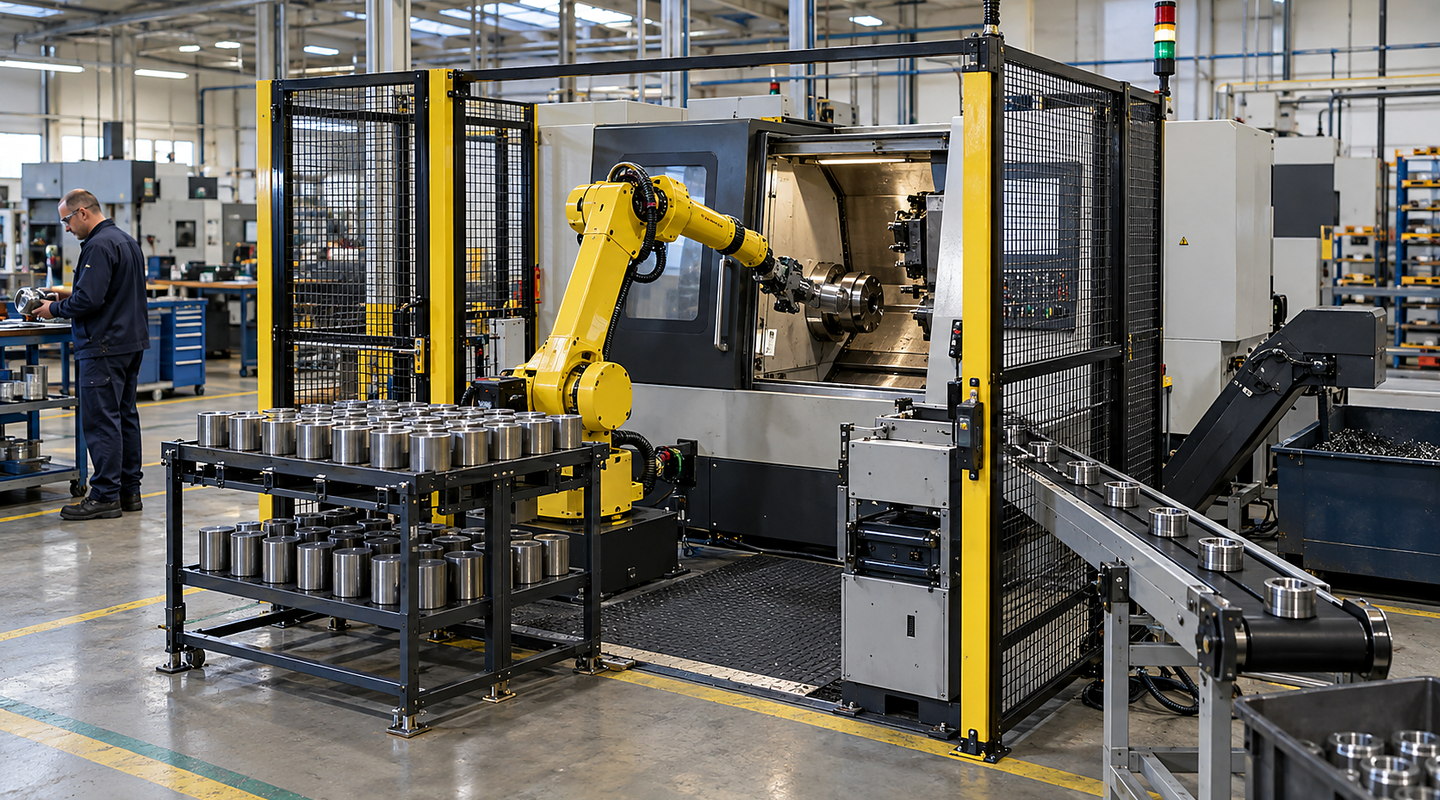
Yellow robot arm beside metal components and an open machine enclosure.
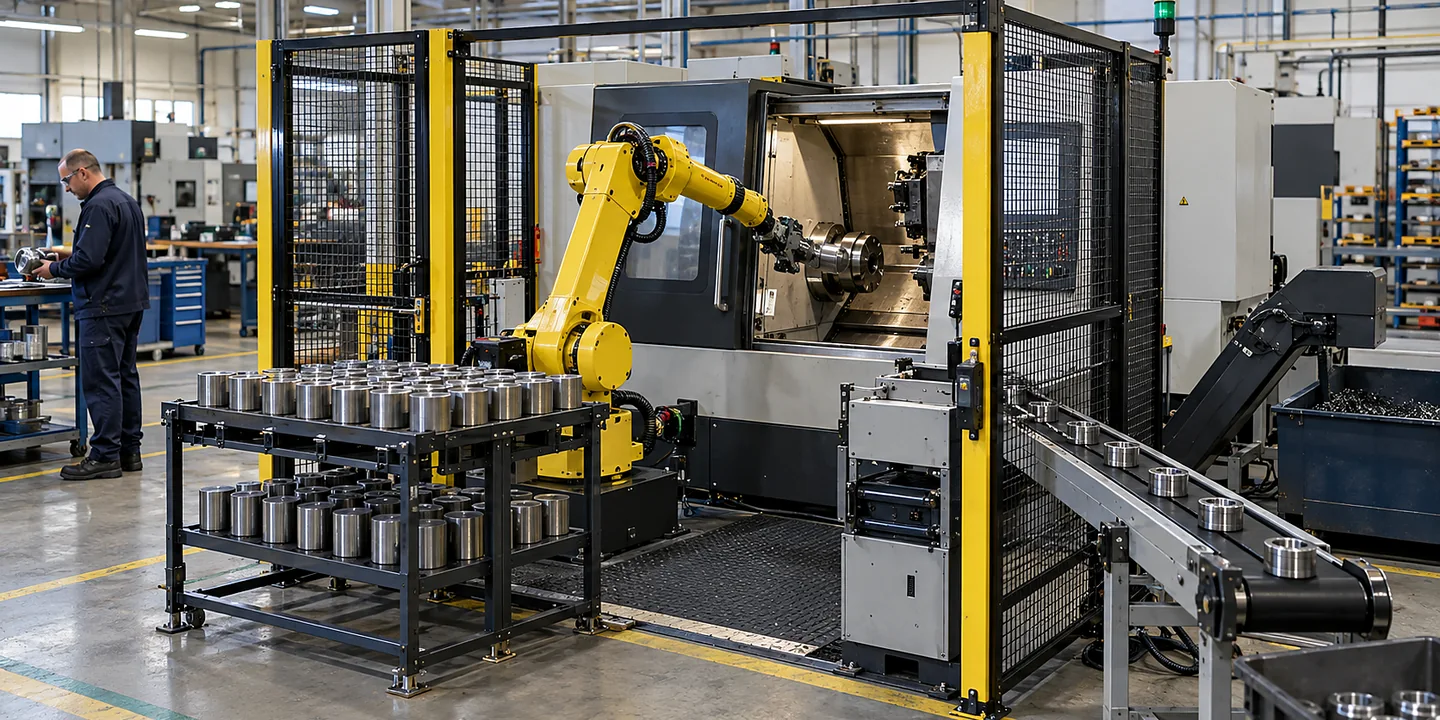
Yellow robot arm and metal tooling beside component fixtures.
Six useful questions

Describe what you need from robotic leak testing before choosing a solution

For repeatable production using robot-loaded leak-test stations, share the normal condition, realistic range and difficult cases the finished system must handle.

Question 1

Part, Product and Process Variation for Robot-Loaded Leak-Test Stations

Provide the approved leak-test method, component and fixture drawings, revisions and acceptance limits. Include representative normal and difficult components and the variation the proposed loading arrangement must handle.

Question 2

Arrival Pattern and Presentation

Describe how components arrive and the presentation required for loading, connection and unloading. Identify the test conditions that must remain unchanged when robotic handling is introduced, and include difficult presentation cases.

Question 3

Required Cycle and Production Pattern

State the required complete cycle and production pattern using current observations and credible extremes. Include loading, connection, the approved test, unloading and result routing rather than specifying robot movement speed alone.

Question 4

Tooling, Sensing and Process Interfaces

Supply details of proposed tooling, sensing and station interfaces. Explain how the test result must remain associated with the correct component and its release or reject route, and list upstream, downstream and external dependencies.

Question 5

Operator Access, Recovery and Changeover

Describe the response required after failed or interrupted tests and the access needed for operators, cleaning, maintenance and changeover. Include these cases in the application assessment without assuming automatic handling is safe.

Question 6

Run-Off Criteria and Production Evidence

Agree representative good, failed and interrupted test cases, the method, repetitions and acceptable results within the approved test requirements. Specify the result record and reviewer, plus documentation, training, exclusions and controls for future changes.
Applications

Two useful starting points for robotic leak testing

The right choice changes with part, product and process variation for robot-loaded leak-test stations, arrival pattern and presentation, your line layout and required results.

What happens next

Your route from an initial enquiry to a working solution

You can review decisions about operator access, recovery and changeover and run-off criteria and production evidence at each stage.

  1. 01

    Observe the Current Process and Collect Representative Samples

    Share representative parts, process observations and cycle data, including the normal range for part, product and process variation for robot-loaded leak-test stations and the difficult arrival pattern and presentation cases.

  2. 02

    Prove Handling and Process Risks in a Focused Feasibility Trial

    Compare suitable methods and use focused trials to show how each option performs against required cycle and production pattern.

  3. 03

    Design and Build the Complete Guarded Cell

    Connect the equipment to your line, services and controls while resolving tooling, sensing and process interfaces for day-to-day operation.

  4. 04

    Run Agreed Scenarios and Support Production Ramp-Up

    Confirm operator access, recovery and changeover, then complete and record run-off criteria and production evidence before your operating team takes over.

Important limits

Know what needs a separate check

Your final solution for robot-loaded leak-test stations must reflect the law, current standards and site-specific risks that apply to your installation.