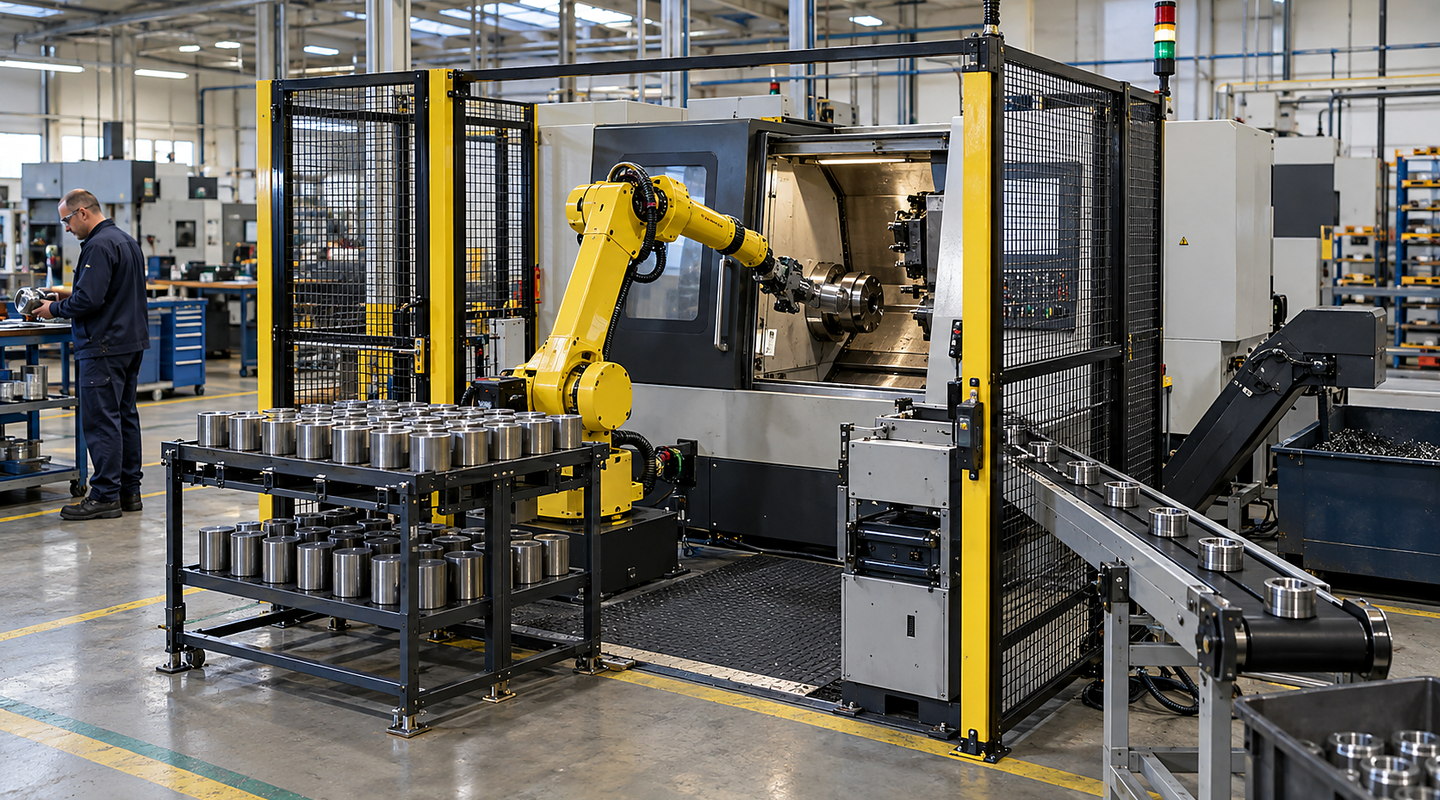
Robotic Leak Testing: How the Process Works
Follow the operating sequence for robotic leak testing, from preparing the input and controlling the main task to handling exceptions and checking results.
Robot-loaded leak testing starts with the approved test method, component fixtures and acceptance limits. Define loading, connection, the approved test, unloading and result routing as one sequence, with handling arranged to preserve the test conditions.
The result must stay associated with the correct component and its release or reject route. Use the component and fixture variation guide and run-off guide to plan good, failed and interrupted cases within the approved test requirements.
Understand the complete route from input to accepted output — Robotic Leak Testing
Follow the component through loading, connection, testing, unloading and its agreed destination. A completed handling movement is not a passed leak test. Define what prevents an uncertain or interrupted result from being treated as an accepted component.
Discuss your application

Four clear stages for robotic leak testing
At each stage, you can review how part, product and process variation for robot-loaded leak-test stations and run-off criteria and production evidence affect the next commitment.
- 01
Observe the Current Process and Collect Representative Samples
Provide the approved test method and limits, component and fixture drawings and revisions, and representative parts. Record the current test conditions and the loading or connection requirements that the proposed handling must preserve.
- 02
Prove Handling and Process Risks in a Focused Feasibility Trial
Assess loading, connection and unloading against the approved test requirements. Agree an assessed method for examining good, failed and interrupted cases, including how each result is associated with its component.
- 03
Design and Build the Complete Guarded Cell
Define the station interfaces and the states needed for loading, test start, completed or interrupted testing, unloading and routing. Record who supplies each state and what must happen when a result or component association is uncertain.
- 04
Run Agreed Scenarios and Support Production Ramp-Up
Record results for the agreed components, fixtures and production pattern. Include complete-cycle observations, good and failed result routing, interruption handling and unresolved cases, then agree operating information and responsibilities for handover.
Decisions and results stay connected
| Stage | What happens | What you can review |
|---|---|---|
| Observe the Current Process and Collect Representative Samples | Confirm the requirements for robot-loaded leak-test stations, the operating range and the definition of a good result. | Your samples, current information and any points that still need confirming. |
| Prove Handling and Process Risks in a Focused Feasibility Trial | Compare workable methods using part, product and process variation for robot-loaded leak-test stations and arrival pattern and presentation from your real production. | The trial method, observations and reason for the recommended route. |
| Design and Build the Complete Guarded Cell | Resolve required cycle and production pattern, tooling, sensing and process interfaces and the physical, control, safety and data connections. | The agreed layout, line connections and any changes from the proposal. |
| Run Agreed Scenarios and Support Production Ramp-Up | Check normal, difficult and fault conditions before your team takes over the system. | Results for operator access, recovery and changeover and run-off criteria and production evidence, plus actions and operating information. |
Keep connected responsibilities clear
Your final robotic leak testing scope must also account for operator access, recovery and changeover, run-off criteria and production evidence, current regulations and the conditions at your site.
- Cycle time depends on the complete process rather than robot speed alone.
- Part presentation, tolerances and recovery cases must be included in feasibility work.
- Collaborative operation or automatic handling cannot be assumed safe without an application assessment.